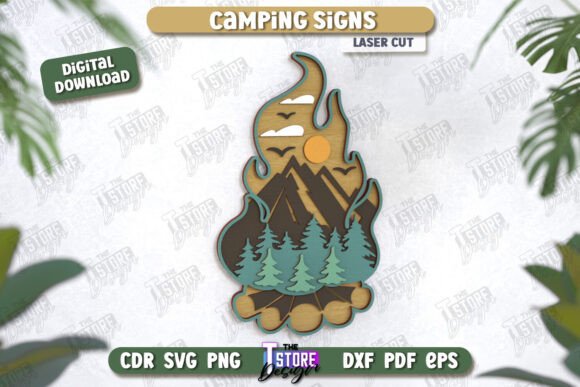
3D Camping Scene Hiking Sign for Laser Cutting
There is a distinct satisfaction in holding a physical object that captures the spirit of adventure. For those who love the outdoors, bringing the wilderness into a home or business space often requires more than just a photograph; it demands texture, depth, and craftsmanship. This is where a Camping Sign 3D Camping Scene Hiking design becomes an invaluable asset. Unlike flat decals or printed posters, a 3D layered sign offers a tactile experience that mimics the rolling hills, towering trees, and rugged terrain of a real campsite. Whether you are a hobbyist looking for a weekend project or a small business owner aiming to expand your product line, understanding how to utilize these digital files effectively can transform a simple concept into a stunning reality.
At its core, this product is a digital blueprint designed specifically for computer-controlled manufacturing, particularly laser cutting machines. The design typically consists of multiple layers that, when stacked, create a sense of perspective and dimension. When you purchase this item, you are not buying a physical sign but rather a comprehensive zip archive containing the instructions your machine needs to build one. The package usually includes five critical file formats: SVG, EPS, PNG (transparent), PDF, and DXF. This variety ensures compatibility across a wide spectrum of hardware and software ecosystems, acknowledging that no two creators work with the exact same setup.
Why File Format Matters for Your Workflow
For beginners and experienced operators alike, the technical specifications of the file can make or break a project. One of the most common hurdles in the laser cutting community involves software interpretation of vector data. Specifically, users working with Lightburn, a popular interface for laser controllers, should pay close attention to which file they select. While SVG files are versatile, they can sometimes suffer from dimension distortion when imported into certain versions of Lightburn. To bypass this frustration entirely, the DXF file format is often the superior choice for maintaining precise measurements. If accuracy is your priority, starting with the DXF ensures that your final cut matches the intended scale without requiring manual recalibration.
However, flexibility remains key. If your workflow relies on graphic design software like Adobe Illustrator or CorelDRAW before sending the job to the cutter, the EPS or PDF files might serve you better for initial editing and visualization. Meanwhile, the transparent PNG is excellent for mockups, allowing you to visualize how the sign will look on a wall or as part of a marketing image before you commit valuable material to the cut. The availability of multiple formats respects the diverse nature of the maker community, ensuring that whether you are a tech-savvy engineer or a creative artist, the tools adapt to you, not the other way around.
Perspectives from Different Creators
The value of a Camping Sign 3D Camping Scene Hiking design shifts depending on who is using it. For a hobbyist or a beginner in the world of CNC and laser cutting, the primary appeal lies in the learning curve and the immediate gratification of a finished project. These users often prioritize ease of use and reliability. They want a file that works "out of the box" so they can focus on mastering their machine's power settings and material handling rather than troubleshooting vector errors. A pre-made, tested design allows them to produce a professional-looking piece for their own cabin or living room, boosting confidence in their new skill set.
In contrast, a professional creator or small business owner evaluates the same file through the lens of commercial viability and production speed. For an entrepreneur running an Etsy shop or a local boutique, time is money. The ability to quickly generate a high-quality product that resonates with the "adventure vibe" market is crucial. These users look for designs that offer uniqueness to stand out in a crowded marketplace. The layered nature of a 3D sign allows for creative material choices—perhaps using reclaimed wood for the base and painted acrylic for the top layers—which adds perceived value and justifies a higher price point. For them, the digital file is an inventory asset that can be reproduced endlessly with minimal marginal cost.
Educators and workshop leaders might view this design as a teaching tool. It provides a practical example of layering, depth perception, and assembly logic. In a classroom setting, students can learn about spatial reasoning by seeing how flat 2D shapes combine to create a 3D landscape. The clear separation of layers in the file makes it easy to explain the sequence of operations, from cutting to gluing. Furthermore, the theme itself is universally relatable, making the technical lesson more engaging for students who might otherwise find machinery intimidating.
Material Choices and Creative Freedom
One of the most exciting aspects of utilizing a Camping Sign 3D Camping Scene Hiking file is the freedom it grants regarding materials. While many default to plywood or MDF for a rustic look, the design is agnostic to medium. A marketer or interior designer might envision this sign in sleek, color-blocked acrylics to fit a modern office aesthetic. A traditional woodworker might choose walnut and maple to highlight natural grain differences between the forest layers and the sky. This flexibility means the same digital download can result in vastly different physical products, each tailored to a specific audience or decor style.
It is also worth noting the importance of communication between the buyer and the seller. Digital marketplaces thrive on support. If you have specific needs—such as requiring a different file type not listed, or needing a PNG in a specific color scheme for a client presentation—reaching out to the creator is often encouraged. Many designers are willing to accommodate reasonable requests to ensure customer success. This collaborative approach fosters a healthier ecosystem for digital goods, where the transaction is just the beginning of the relationship.
Making the Right Decision for Your Project
Before downloading or purchasing, consider your end goal. Are you creating a one-off gift for a hiking enthusiast? Is this for a batch of inventory for the upcoming holiday season? Or are you simply practicing your machine's capabilities? If your goal is rapid prototyping, ensure your software handles the chosen file format smoothly to avoid wasted material. If your goal is artistic expression, think about how the layers will interact with light and shadow in their final location.
Ultimately, a well-designed 3D camping scene bridges the gap between digital precision and organic beauty. It allows individuals from all walks of life—from freelancers to factory owners—to participate in the creation of meaningful decor. By selecting the right file format for your specific machine, such as opting for DXF in Lightburn to prevent distortion, and choosing materials that align with your vision, you turn a simple set of vectors into a lasting tribute to the great outdoors. Whether for personal enjoyment or commercial gain, these designs offer a robust foundation for creativity, proving that sometimes the best adventures begin right at your workbench.