Monkey Favor 3D Papercraft: Your Quick Creative Project
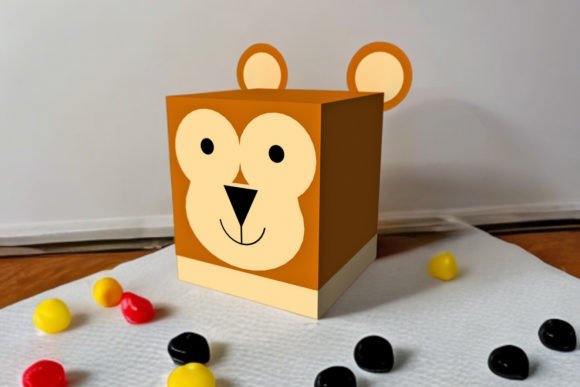
There is a distinct satisfaction in transforming a flat sheet of paper into a tangible, three-dimensional object. It is a process that bridges the gap between digital design and physical reality, requiring nothing more than your hands, some basic tools, and a bit of patience. Monkey Favor - 3d Papercraf offers exactly this experience, providing a structured yet creative outlet that fits seamlessly into a busy lifestyle. With an assembled size of 10 x 10 x 7 centimeters, these models are compact enough to sit on a desk or shelf without cluttering your space, yet detailed enough to serve as a focal point of conversation.
The appeal of this specific project lies in its accessibility. The entire assembly process is designed to take approximately one hour. This timeframe is significant because it represents a perfect "micro-project." It is long enough to allow you to disconnect from screens and immerse yourself in a tactile activity, but short enough to complete during a lunch break or a quiet evening without requiring a massive time commitment. Whether you are looking to decompress after work or need a quick, handmade gift, the efficiency of this build makes it a practical choice for modern creators.
Understanding the Digital-to-Physical Workflow
At its core, Monkey Favor Digital Files represent a shift in how we consume craft supplies. Instead of purchasing a pre-packaged kit with pre-cut pieces, you receive the blueprints to create the object yourself. When you acquire these files, you gain access to a versatile suite of formats including PDF, EPS, DXF, and PNG. This variety ensures compatibility with almost any workflow. The PDF is ready for immediate home printing, while the EPS and DXF files cater to those who might have access to laser cutters or CNC machines for even sharper precision.
To begin, the requirements are intentionally low-barrier. You do not need an expensive studio setup. The essential toolkit includes a colored printer, glue, scissors, a craft knife, a scorer or bone folder, a non-working ballpoint pen, a ruler, and, most critically, A4 or Letter sized cardstock paper. The instruction is straightforward: print the templates full size, cut them out, score the fold lines, bend along the scores, and glue the flaps. This simplicity democratizes the creation process, allowing anyone with a standard home office setup to become a manufacturer of their own decor.
Perspectives for Different Creators
The value of Monkey Favor - 3d Papercraf changes depending on who is holding the scissors. For a beginner or a hobbyist just dipping their toes into the world of papercraft, the primary draw is the guided structure. The pre-designed templates remove the intimidation of engineering a 3D shape from scratch. You can focus entirely on the technique of scoring and folding, learning how paper tension holds a shape together without needing to understand complex geometry. The one-hour estimate provides a safe boundary; if you get stuck, you haven't lost days of work, making it a low-risk learning environment.
For educators and parents, this project serves as an excellent tool for developing fine motor skills and spatial reasoning. The act of using a bone folder to score lines before folding teaches precision and the importance of preparation. It is a hands-on lesson in following instructions and executing a plan. Because the final product is a monkey—a universally recognizable and friendly subject—it engages children and adults alike, making it suitable for classroom activities or family bonding time where the goal is collaboration rather than perfection.
Experienced crafters and professionals often evaluate these files through a lens of customization and integration. Having access to EPS and DXF files means a professional designer can import the vectors into software like Adobe Illustrator or CorelDRAW to modify colors, add branding, or adjust dimensions before cutting. A small business owner might use the base design to create unique party favors for an event, printing them on branded cardstock that matches a specific color scheme. The flexibility of the file formats allows the Monkey Favor Digital Files to be a component in a larger creative ecosystem rather than just a standalone toy.
Evaluating Priorities: Quality, Speed, and Utility
When deciding if this project matches your goals, consider what you prioritize in a creative endeavor. If speed is your main concern, the one-hour assembly time is a major asset. Unlike intricate architectural models that can take dozens of hours, this project delivers a finished result quickly. However, speed should not come at the cost of quality. The use of cardstock paper is essential here; standard printer paper would be too flimsy to hold the 10 x 10 x 7 cm structure rigidly. Investing in good quality cardstock ensures the final model has the durability to be handled and displayed.
For those focused on cost-effectiveness, the digital nature of this product is unbeatable. You pay once for the files and can print them as many times as you wish. If a cut goes wrong or a flap gets torn during gluing, you simply print another copy. This eliminates the waste and frustration associated with traditional kits where a single mistake can ruin the entire project. It encourages experimentation; you might try assembling one version with standard colors and another with metallic or textured paper to see how the lighting interacts with the facets of the monkey's face.
The aspect of presentation also varies by user. A blogger or content creator might use the assembly process itself as content, documenting the transformation from flat paper to 3D art for social media. The clean lines and geometric style of modern papercraft photograph well, offering aesthetic value beyond the physical object. Meanwhile, a consumer looking for home decor might appreciate the minimalist look of the finished monkey, which fits well in contemporary interiors where bold, sculptural elements are preferred over ornate details.
Practical Tips for Success
Regardless of your background, success with Monkey Favor - 3d Papercraf relies on a few key techniques. First, never skip the scoring step. Using a non-working ballpoint pen or a dedicated scorer to trace the fold lines creates a channel in the paper fibers. This allows the paper to bend cleanly without cracking the surface color, resulting in sharp, professional-looking edges. Second, take your time with the glue. Apply a thin layer to the flaps rather than soaking the paper, which can cause warping. Holding the pieces together for a few seconds until the adhesive sets makes a significant difference in the structural integrity of the final model.
It is also worth noting the scale of the project. At 10 x 10 x 7 centimeters, it is substantial enough to have presence but small enough to be part of a collection. You might consider building multiple units in different colors to create a dynamic display. The modular nature of papercraft means you can easily expand your creation later if you enjoy the process.
Ultimately, whether you are a freelancer looking for a mental break, a marketer seeking a unique promotional item, or a parent wanting a rainy-day activity, this project adapts to your needs. It respects your time while rewarding your effort with a physical artifact of your creativity. If you encounter any hurdles during the printing or assembly phase, remember that support is available. If you have any questions, please feel free to ask anytime, ensuring that your journey from digital file to finished monkey is as smooth and enjoyable as possible.