Unlocking Culinary Creativity with Fast Food 3D SVG Designs
In the rapidly evolving world of digital crafting, the intersection of nostalgia and modern technology has given rise to a unique trend: the Fast Food 3D SVG. For creators, small business owners, and hobbyists alike, these files represent more than just digital images; they are blueprints for tangible, three-dimensional art that captures the whimsical essence of iconic cuisine. Whether you are looking to create eye-catching party decorations, unique retail displays, or personalized gifts, understanding the utility and versatility of these designs is essential for maximizing your creative output.
The Evolution from Flat to Dimensional Design
Traditionally, Scalable Vector Graphics (SVG) have been the backbone of the cutting machine community, used primarily for creating flat decals, vinyl stickers, and iron-on transfers. However, the introduction of 3D SVG files has shifted the paradigm. Unlike standard vectors that result in a single layer of material, 3D SVGs are engineered with multiple layers, tabs, slots, and fold lines. When assembled, these flat pieces transform into standing structures with depth and volume.
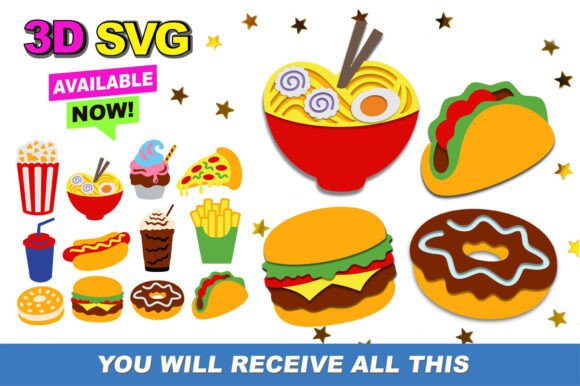
The Fast Food 3D SVG category specifically taps into the universal language of food. From towering burgers and crispy fries to steaming coffee cups and colorful soda cans, these designs leverage familiar shapes to create instant visual recognition. The appeal lies in the transformation process: taking a neatly zipped folder of digital data and turning it into a physical object that occupies space, casts shadows, and invites interaction.
Accessibility and File Management
One of the most significant advantages of modern digital assets is their accessibility. High-quality Fast Food 3D SVG packs are typically delivered in a neat, zipped folder. This compression method ensures that all necessary components—often including separate files for different sizes or variations—are kept organized and easy to download. For the user, this means less time searching for missing pieces and more time focusing on the creation process.
Upon extracting the folder, users will find files optimized for precision. The geometry within these SVGs is calculated to ensure that tabs fit securely into slots without requiring excessive glue or tape, although adhesive can always be used for extra stability. This "effortlessly trimmable" nature is crucial for maintaining clean edges, especially when working with thicker materials like cardstock or thin wood.
Software Compatibility and Workflow
A common question among creators is whether their specific hardware can handle these intricate designs. The beauty of the SVG format is its universality. If your creativity flows through a different type of machine, kindly ascertain its compatibility with this distinct file format, but rest assured that most major platforms support it.
- Silhouette Studio: Users of Silhouette machines will find that these files import seamlessly. The software recognizes the cut lines, score lines, and fold marks automatically, allowing for a smooth workflow from screen to mat.
- Cricut Design Space: Similarly, Cricut users can upload the Fast Food 3D SVG directly. The platform's "Make It" feature often detects the multiple layers required for 3D assembly, arranging them on the virtual mat to minimize material waste.
- Other Cutting Machines: For those using Brother ScanNCut, Sure Cuts A Lot (SCAL), or MakeTheCut, the SVG standard ensures that the vector paths remain editable and scalable without losing resolution.
It is important to note that while the cutting process is automated, the assembly requires a human touch. This hybrid approach combines the precision of digital fabrication with the satisfaction of manual crafting.
Material Considerations for Success
To achieve the best results with a Fast Food 3D SVG, material selection is paramount. While vinyl is excellent for flat applications, 3D projects demand structural integrity.
- Cardstock: The most popular choice due to its balance of flexibility and stiffness. A weight of 65lb to 80lb is usually ideal for holding shape while still being easy to fold.
- Paper: Suitable for smaller, delicate models or prototypes, though it may lack the durability needed for long-term displays.
- Thin Wood or Bamboo: For advanced users with laser cutters or specialized knife blades, these materials can create rustic, high-end versions of fast food icons.
- Foam Board: Excellent for large-scale props where lightweight structure is necessary.
When preparing your machine, ensure your blade is sharp. Dull blades can tear the fibers of cardstock, leading to jagged edges that compromise the fit of the 3D joints. Furthermore, utilizing the "score" function on your machine for fold lines can make the assembly process significantly smoother and more professional.
Real-World Applications and Scenarios
The versatility of Fast Food 3D SVG designs extends far beyond simple home decor. Professionals across various industries are finding innovative ways to integrate these assets into their workflows.
Retail and Visual Merchandising
Small boutiques and cafes often struggle with costly signage. By utilizing 3D SVGs, a coffee shop owner can create oversized, dimensional donuts or coffee cups to hang in the window. These eye-catching displays draw attention without the high cost of custom molding or 3D printing. Because the files are scalable, a creator can produce a miniature version for a cupcake topper and a giant version for a storefront display using the same source file.
Event Planning and Parties
For event planners, themed parties are a staple. A "Diner Night" or a children's birthday party centered around favorite meals can be elevated with 3D centerpieces. Imagine a table scattered with standing french fry boxes filled with balloons or napkins, or a backdrop made entirely of layered pizza slices. The Fast Food 3D SVG allows for rapid prototyping of these ideas, enabling planners to test color schemes and arrangements before committing to final production.
Educational Tools
Teachers and educators can also benefit from these resources. In a math class, 3D food models can be used to teach geometry, volume, and spatial reasoning. In art classes, they serve as an introduction to papercraft engineering. The tactile nature of assembling these models helps students understand how 2D patterns translate into 3D objects, a fundamental concept in design and architecture.
Evaluating Suitability for Your Projects
Before diving into a project, it is wise to evaluate whether a Fast Food 3D SVG is the right solution for your specific needs. Consider the following factors:
Scale and Space: Do you have the physical space to display a 3D object? Unlike a flat sticker, these items protrude and require depth. Ensure your intended location can accommodate the dimensions of the assembled piece.
Durability Requirements: If the item is intended for outdoor use or high-traffic areas, consider the material limitations. Standard cardstock may not withstand humidity or rough handling. In such cases, you might need to laminate the pieces or choose a more robust material like acrylic or wood, provided your machine can cut it.
Time Investment: While the cutting is fast, the assembly takes time. Complex Fast Food 3D SVG models with many layers can take anywhere from 15 minutes to an hour to assemble per unit. For large batches, factor this labor into your timeline or pricing if you are selling the finished goods.
The Value of Digital Flexibility
One of the strongest arguments for using digital SVGs is the ability to customize. Colors can be changed instantly in your design software to match brand guidelines or party themes. A burger design can be tweaked to look vegetarian, or a soda cup can be resized to fit a specific prop requirement. This level of control is rarely available with pre-manufactured decorations.
Moreover, the cost-effectiveness cannot be overstated. A single purchase of a Fast Food 3D SVG bundle allows for unlimited cuts. Whether you need one centerpiece or one hundred for a large event, the marginal cost is simply the price of the material. This makes it an incredibly attractive option for entrepreneurs looking to maximize profit margins on handmade goods.
Conclusion
The realm of digital crafting continues to expand, offering tools that bridge the gap between imagination and reality. The Fast Food 3D SVG stands out as a testament to this innovation, combining the charm of everyday objects with the precision of modern cutting technology. Whether you are a professional designer seeking unique assets for clients, a business owner looking for cost-effective marketing tools, or a hobbyist eager to explore the depths of papercraft, these files offer a gateway to endless possibilities.
By understanding the file formats, selecting the right materials, and appreciating the structural design inherent in these SVGs, creators can produce stunning, dimensional works of art. As you unzip that folder and load your machine, remember that you are not just cutting paper; you are constructing experiences, one layer at a time. Embrace the potential of 3D design and let your creativity serve up something truly special.